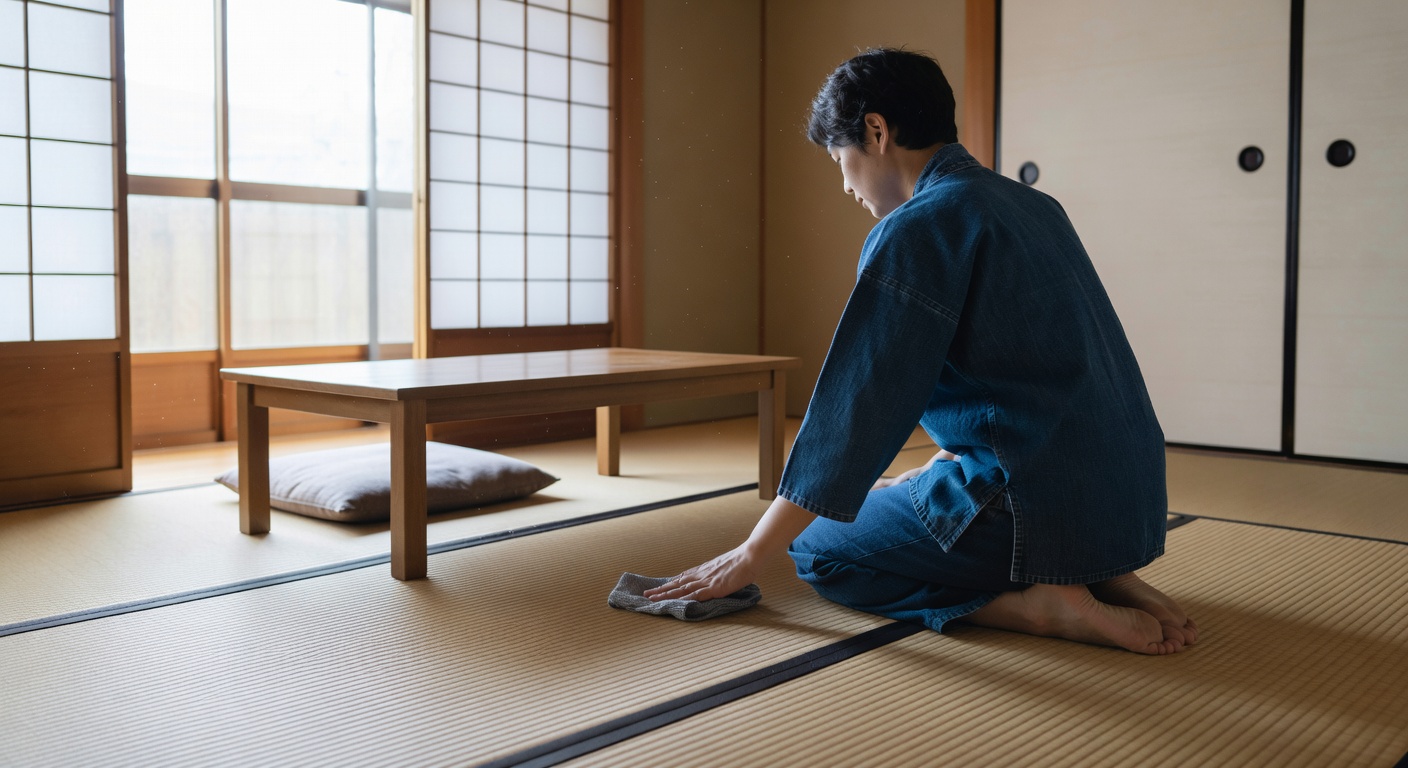
Tatami Mat Cleaning — Without Damaging the Fibers
Rush-grass Tatami mats are delicate, beautiful, and surprisingly easy to maintain — if you know the right approach. Learn the correct direction to clean, which products to avoid, and how to keep your mats fresh season after season.
Read the full guide →Shoji Paper Repair
See all guides →
Replacing Shoji Paper: A Complete Overview
Understand the full process before you begin — from choosing the right Washi paper to the final trim.
Read guide →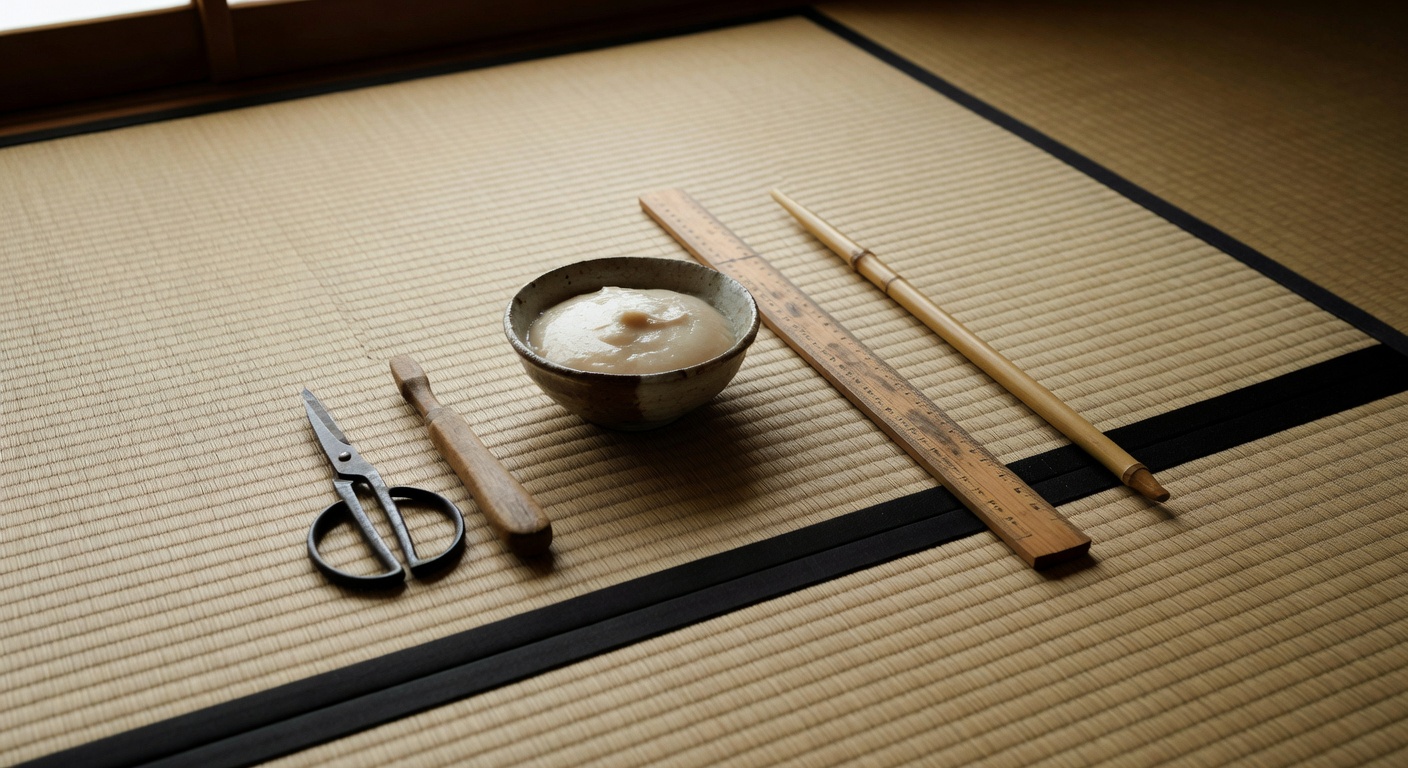
Hands-On Shoji Repair: Every Step Explained
Clear, numbered instructions for applying adhesive, positioning paper, and finishing cleanly.
Read guide →Tatami Mat Care
See all guides →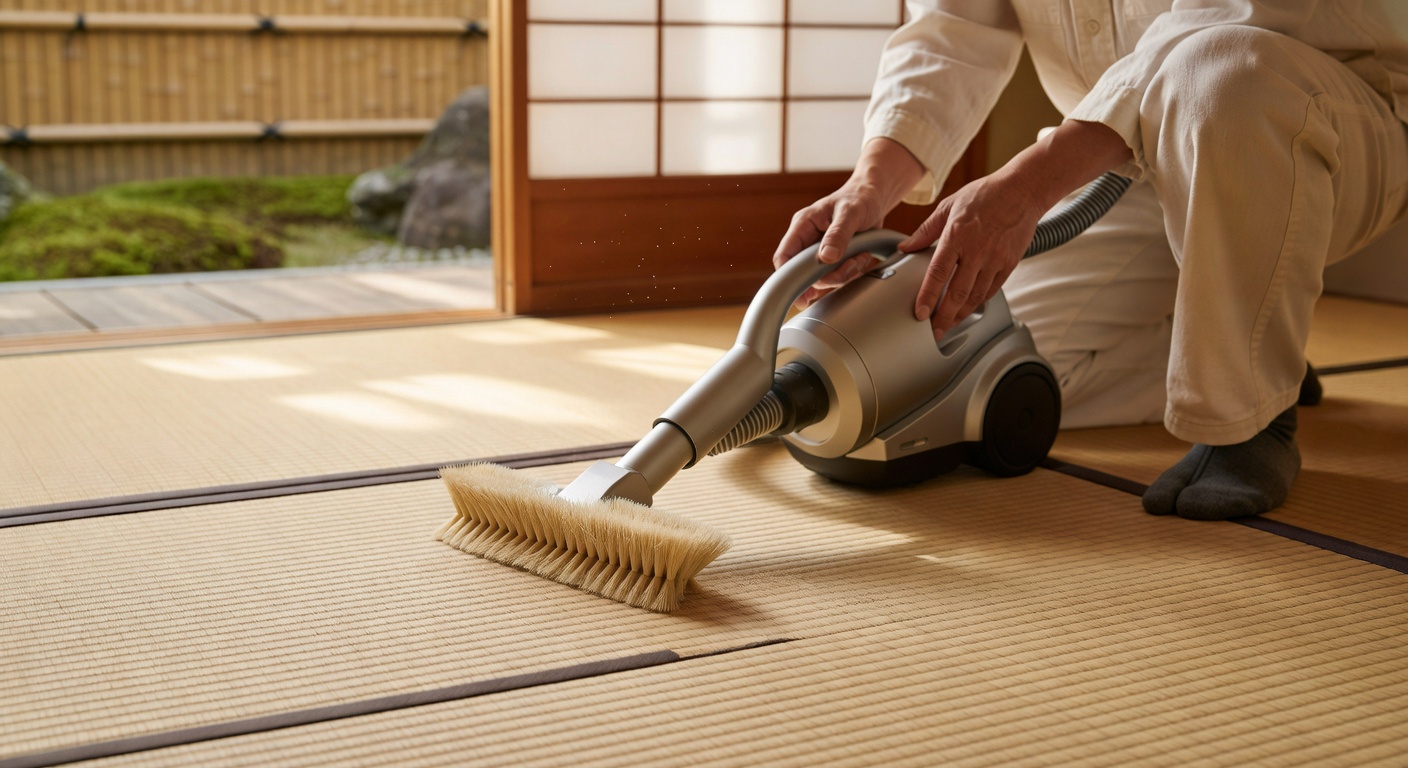
Daily & Weekly Cleaning Routines
Simple habits that keep Tatami in excellent condition year-round — vacuum direction, cloth wiping, and moisture control.
Read guide →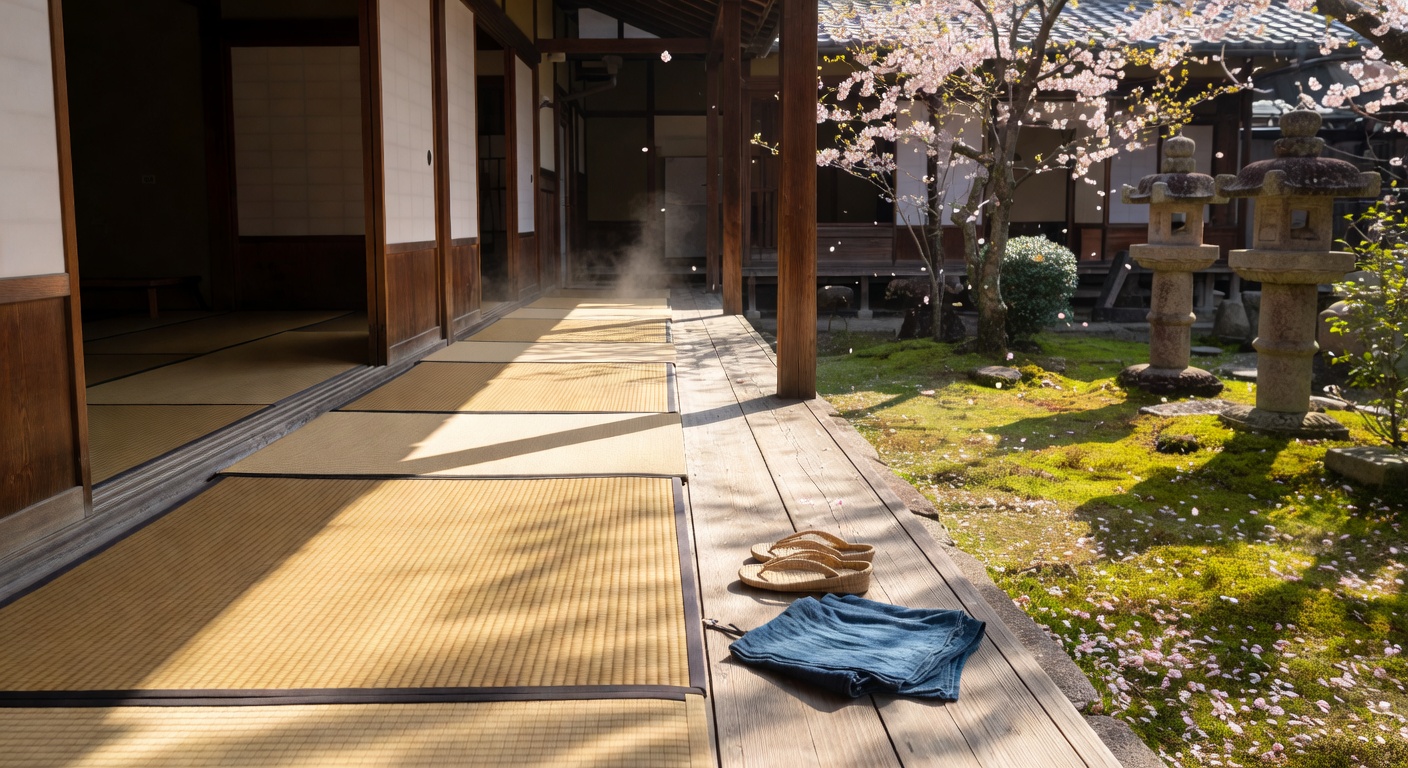
Caring for Tatami Through Every Season
Japan's humid summers and dry winters each pose unique challenges. Walk through a year of care in simple steps.
Read guide →Essential Care Reminders
Always clean with the grain Brush and wipe Tatami in the direction of the rush fibers to avoid fraying.
Dry before re-installing Shoji Allow freshly glued Washi paper to dry fully (12–24 hours) before closing frames.
Ventilate daily Open windows for 20 minutes each morning to reduce mold risk around Tatami mats.
Avoid excess water Tatami absorbs moisture quickly. Use a barely damp cloth — never wet — when wiping mats.