When is Deep Cleaning Needed?
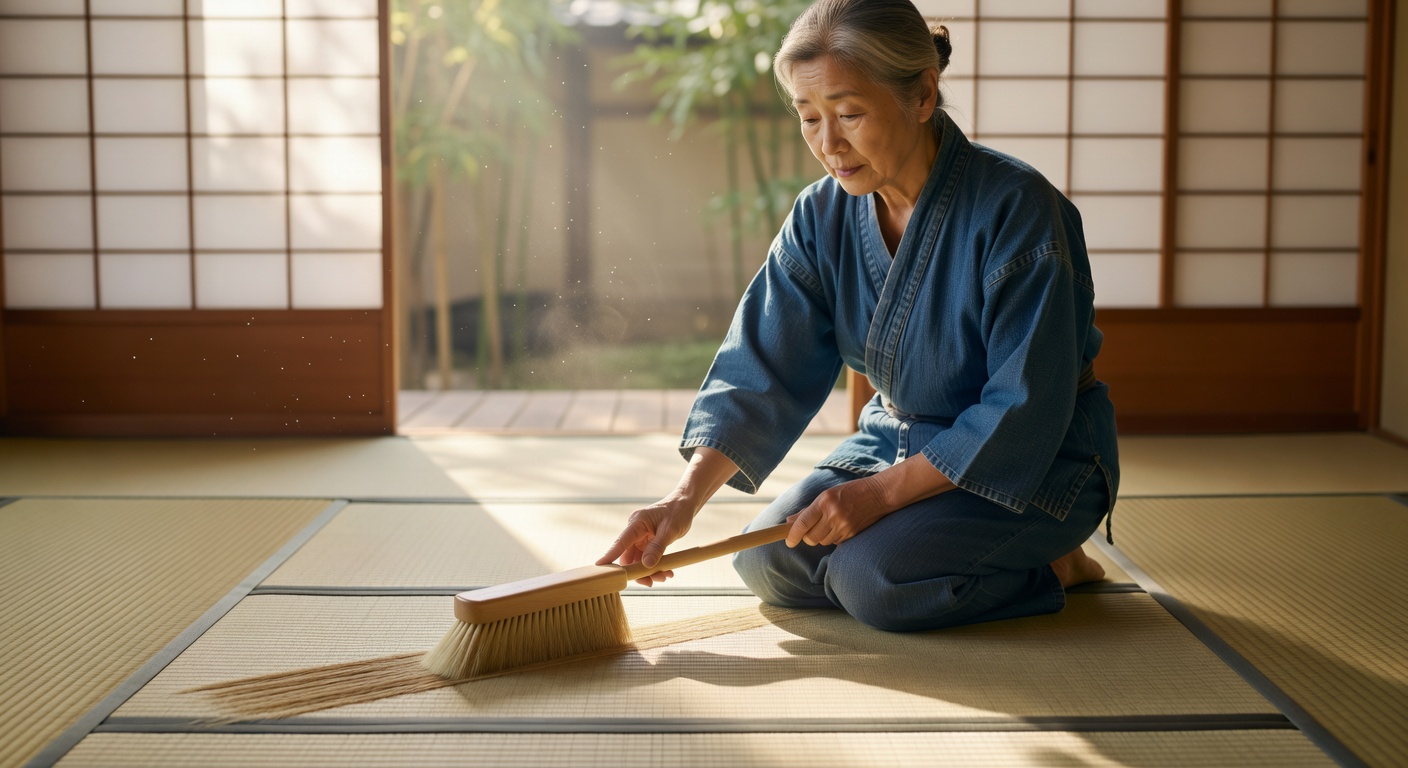
A soft natural-bristle brush lifts embedded dust from the weave without stressing individual fibres.
Routine vacuuming and wiping handle everyday maintenance admirably. But periodically — typically once or twice a year — a deeper clean is beneficial. Signs that your Tatami needs more than routine care include:
- Visible stains from food, drink, or pet accidents
- A persistent musty or stale odour despite regular cleaning
- Dark discolouration (especially in corners) that may indicate mold
- A dull, dusty surface appearance that vacuuming alone does not resolve
- Increased allergy symptoms in household members
The Dry-Brush Method
Before introducing any moisture, always begin with a thorough dry brush. Use a soft, natural-bristle brush (a painter's brush or upholstery brush works well) to work along the grain in short, gentle strokes. This loosens embedded dust and dried particles that a vacuum cannot reach.
Follow immediately with a thorough vacuuming on low suction, also along the grain. The combination of brushing and vacuuming removes the vast majority of built-up dirt without any risk of moisture damage.
To refresh the scent of older Tatami, sprinkle a very light dusting of food-grade baking soda along the grain. Leave for 30 minutes, then vacuum thoroughly along the grain. This neutralises odour without chemicals or moisture — a completely safe, traditional-adjacent technique.
Stain Treatment Guide
Act on stains as quickly as possible — the longer a stain sets into rush fibres, the more difficult it becomes to remove. The table below covers the most common household stains:
| Stain Type | Treatment Method | Notes |
|---|---|---|
| Water / Light Liquid | Blot immediately with a dry cloth — do not rub. Allow to air-dry with windows open. | Speed is key. Rubbing spreads the stain. |
| Tea / Coffee | Blot excess, then dab with a cloth barely dampened with cold water. Blot dry. Repeat if needed. | Never use hot water — sets the stain. |
| Soy Sauce | Blot well, then dab with a cloth dampened with slightly salted cold water. Blot dry thoroughly. | Salt helps lift protein compounds. |
| Cooking Oil / Grease | Absorb with dry flour or cornstarch — leave 10 minutes, then brush away along the grain. Follow with dry cloth. | Avoid water, which spreads oil. |
| Ink / Pen | Dab gently with a cloth very lightly dampened with isopropyl alcohol. Blot dry immediately. | Test in an inconspicuous area first. |
| Pet Accidents | Blot well, apply baking soda to absorb, leave 20 minutes, vacuum. Finish with a cloth barely dampened with white vinegar solution (1:10), then dry immediately. | Work quickly to prevent straw core absorption. |
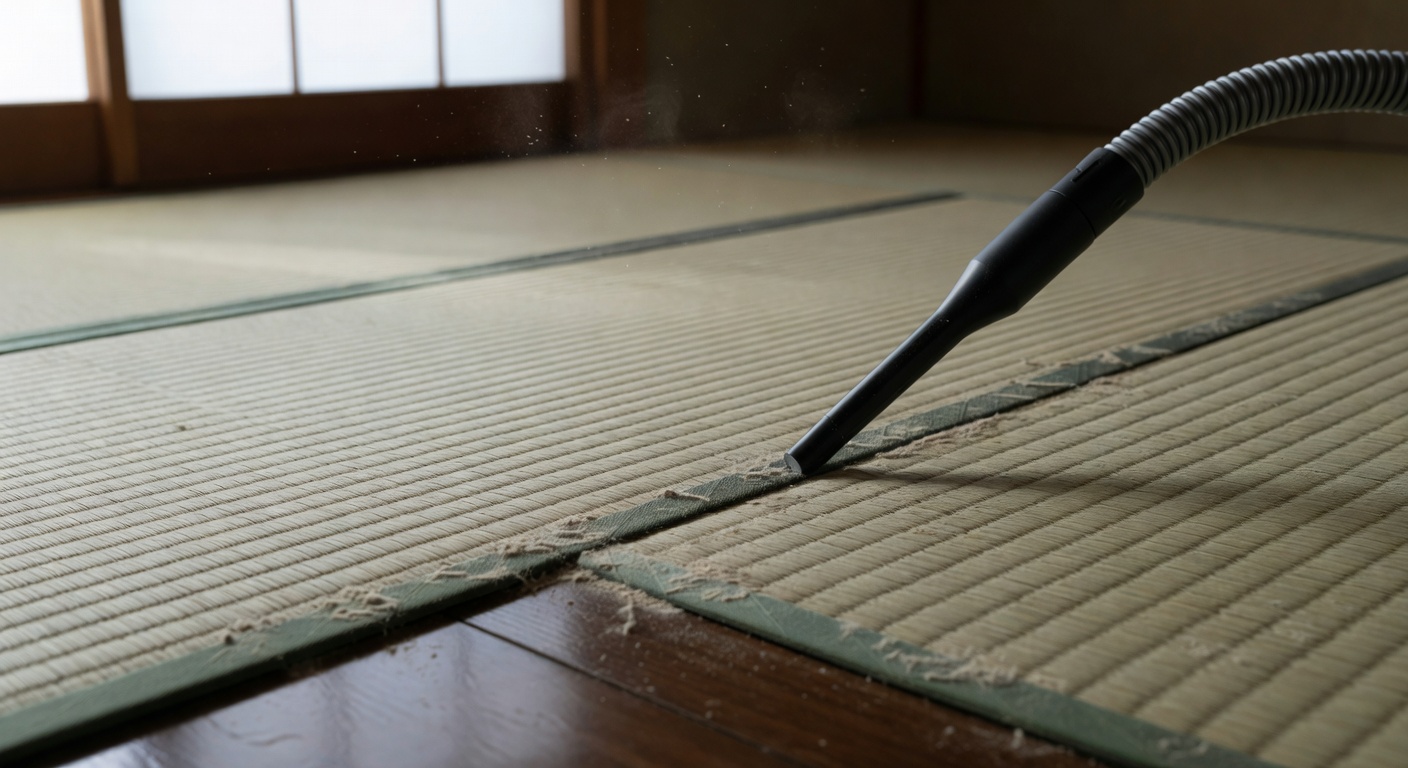
The border cloth (heri) accumulates dust in its stitching — a small soft brush cleans it effectively.
Treating the Borders (Heri)
The woven border strips of Tatami (heri) are often neglected but benefit greatly from attention during deep cleaning. Use a small, soft brush to work along the stitching channels, then wipe the border cloth with a barely damp cloth. The border is typically made of cotton or synthetic fabric and tolerates a slightly more damp touch than the rush surface.
Addressing Mold
Surface mold presents as dark grey or black spots, often beginning in corners or under furniture. At the first sign of mold:
- Move the Tatami mat outside immediately (if physically possible)
- Brush the surface mold off with a dry brush in good ventilation
- Wipe affected areas with a cloth lightly dampened with a 1:10 white vinegar and water solution
- Stand the mat in shade (never direct sun, which can warp the mat) in a well-ventilated area for 3–4 hours
- Return to the room only when completely dry
If mold has penetrated the straw core of the mat (identifiable by a persistent mildew smell even after surface treatment), professional tatami restoration or replacement is required. Deep mold cannot be effectively treated at home. Contact a tatami craftsperson (tatami-ya) for assessment.