Understanding Tatami
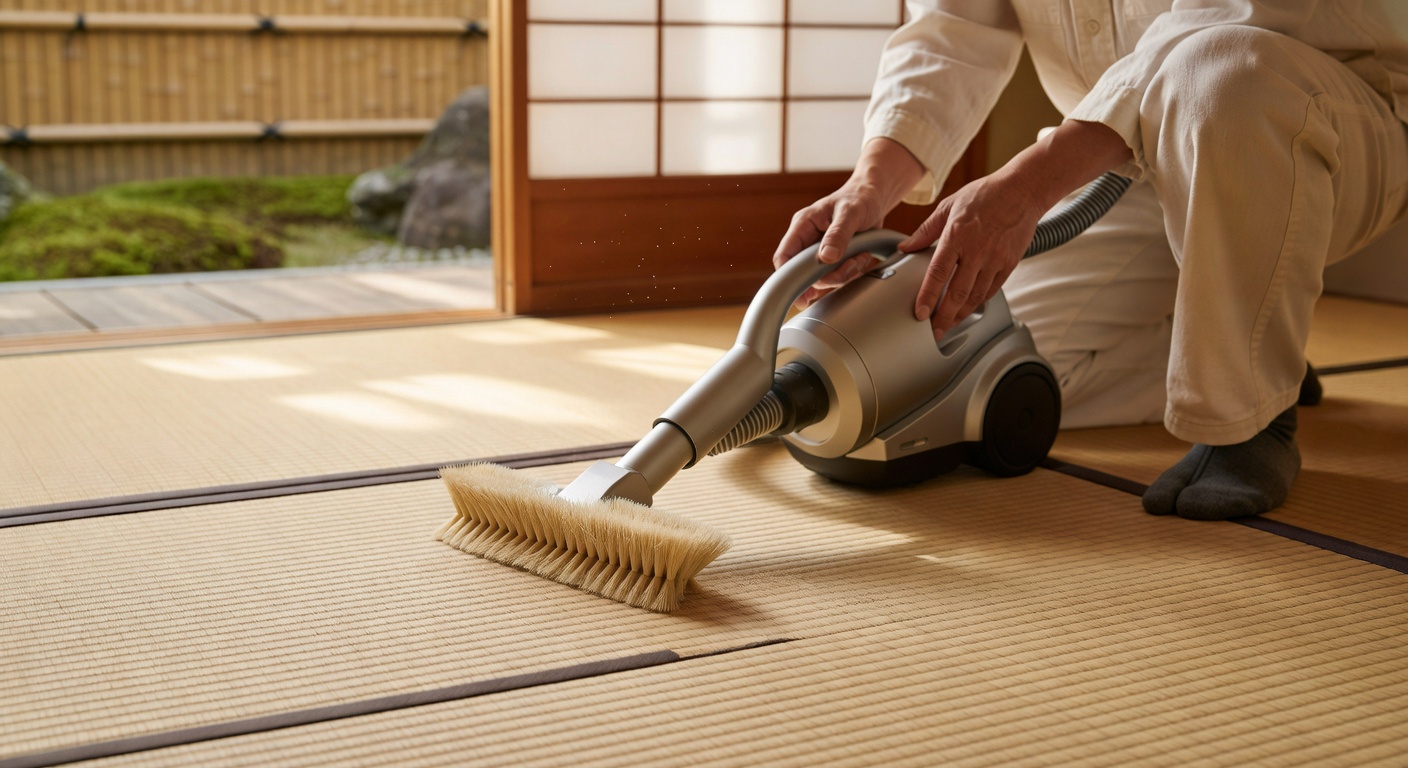
Always vacuum along the direction of the rush-grass fibers — never across them.
Tatami (畳) are traditional Japanese floor mats made from a core of rice straw (wara) covered with a woven surface of dried rush grass (igusa). They are naturally antimicrobial, humidity-regulating, and softly fragrant when new — a living material that rewards careful maintenance.
New Tatami is a distinctive pale green colour, gradually mellowing to a warm golden tone with age. Both states are beautiful. The goal of cleaning is not to restore colour, but to remove dirt, prevent moisture damage, and preserve the integrity of the woven surface.
The Golden Rule: Always Go With the Grain
The most important principle in Tatami cleaning is direction. The rush-grass surface is woven with a distinct grain — a series of fine parallel ridges running the length of each mat. Always clean, brush, vacuum, and wipe along this grain, never across it.
Cleaning against the grain pushes dust and debris deeper into the weave, frays the delicate fibres, and accelerates surface wear. Once you have identified the grain direction on your mats, this principle becomes second nature.
Run the back of your hand gently across the surface of your Tatami. You will clearly feel a smooth direction (with the grain) and a slightly resistant direction (against it). Always clean in the smooth direction.
Cleaning Routines
Dry Brushing or Sweeping
Use a soft broom or dry cloth to sweep dust and surface debris along the grain. Takes 2–3 minutes and prevents the buildup that leads to staining.
Vacuuming
Use a vacuum on low suction with a soft brush attachment. Move slowly along the grain. Never use a beater bar or carpet attachment — these damage the weave.
Damp Cloth Wiping
Wring a cloth until almost completely dry, then wipe along the grain in long, smooth strokes. Finish by wiping with a dry cloth. Never leave moisture on the surface.
Airing & Turning
Carry mats outside on a dry, breezy day once or twice per year. Stand them upright in shade for 2–3 hours. Rotate mat positions within the room for even wear.
Correct Vacuuming Technique
Vacuuming is your most effective regular cleaning tool — but only if used correctly. Follow these guidelines:
- Use the lowest suction setting your vacuum offers
- Attach a soft upholstery or brush nozzle — never a hard floor head
- Move the vacuum head slowly along the grain in straight, overlapping passes
- Pay extra attention to the borders (heri) where dust accumulates in the stitching
- Vacuum once per week, or more frequently in dusty environments
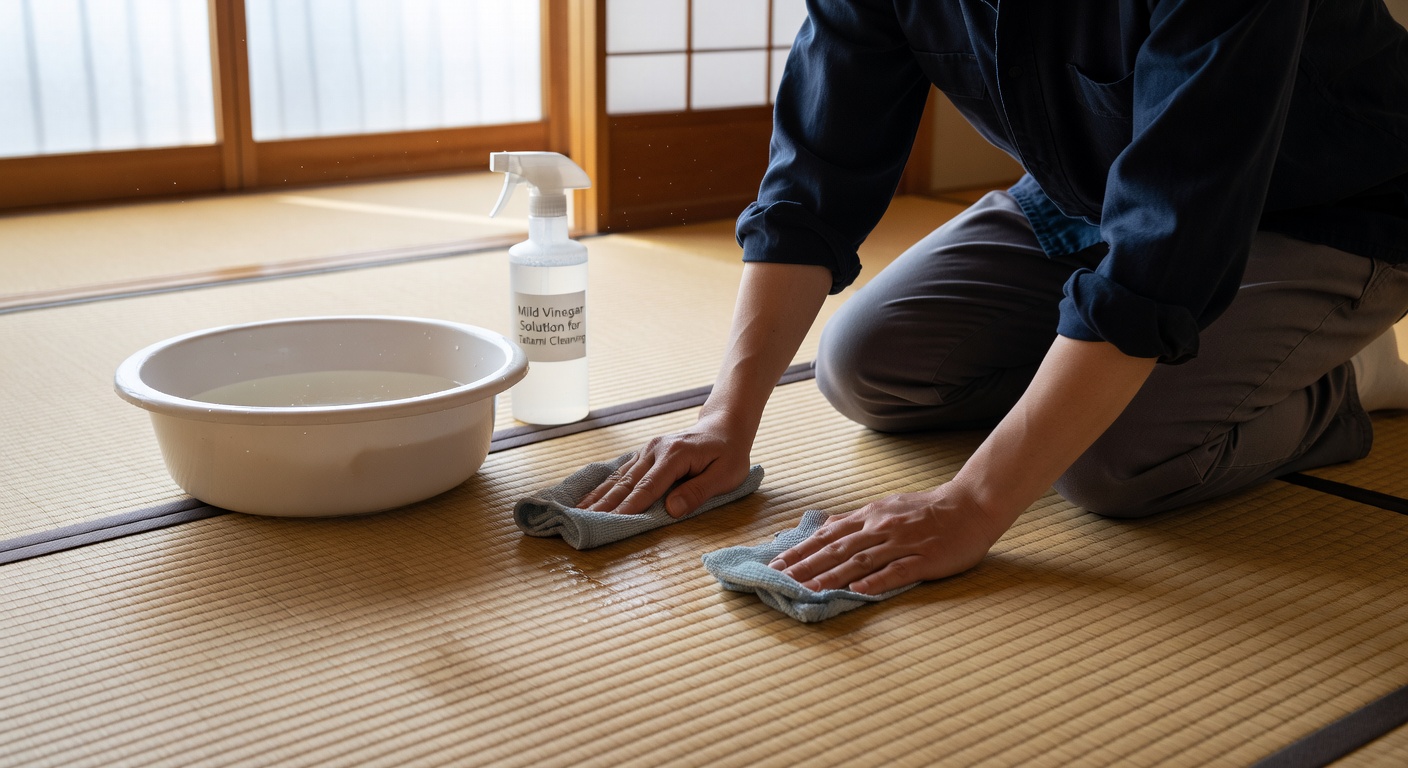
Wiping with a barely damp cloth — the final step to lift fine dust not captured by vacuuming.
Cloth Wiping: The Right Amount of Moisture
Tatami and excess moisture are enemies. The straw core absorbs water readily, creating conditions for mold and mildew that are very difficult to treat. When wiping with a cloth:
- Dampen the cloth with plain water — avoid cleaning sprays or soap
- Wring the cloth as tightly as possible — it should feel almost dry to the touch
- Wipe in long strokes following the grain
- Immediately follow with a completely dry cloth using the same motion
- Open windows to aid drying and do not place furniture back on the mat for at least one hour
Never use detergents, household cleaners, bleach, or scented products on Tatami. Chemical residues attract dust and insects, damage the natural rush fibres, and alter the mat's natural fragrance. Plain water is almost always the correct choice for routine cleaning.
Continue Reading
For tackling stains, odours, and more persistent problems, see our companion guides: