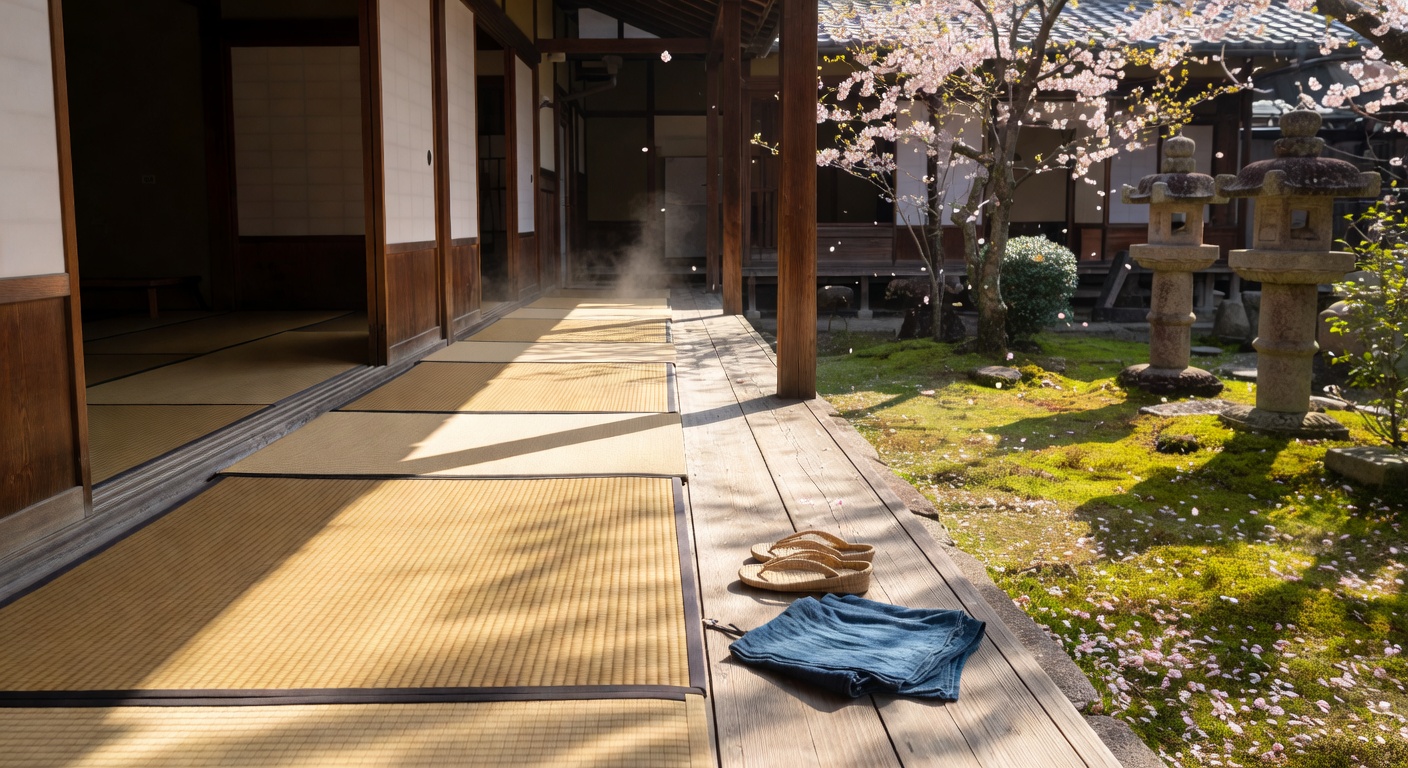
Why Seasons Matter for Tatami
Tatami mats are made from natural materials — rush grass and rice straw — that respond directly to temperature and humidity. Japan's climate is particularly challenging: hot, humid summers promote mold; cold, dry winters cause fibres to become brittle.
A seasonal maintenance approach — adjusting your care practices to match the climate — makes a tremendous difference to how long your mats remain beautiful and structurally sound.
Care by Season
🌸 Spring (March – May)
Increasing warmth and occasional rain. Prime time for thorough cleaning.
- Carry mats outside for their first full airing of the year
- Perform a thorough dry-brush and vacuum after winter's indoor accumulation
- Inspect seams and borders for any winter damage — resecure loose threads immediately
- Rotate mat positions within the room for even aging and wear
- Replace Shoji paper if you did not do so in autumn
- Increase daily ventilation as temperatures allow
☀️ Summer (June – August)
High humidity and heat — the most demanding season for Tatami.
- Ventilate the room for at least 30 minutes every morning
- Use a dehumidifier or air conditioning to keep humidity below 60%
- Vacuum twice weekly during the rainy season (tsuyu)
- Avoid placing furniture with solid flat bases directly on Tatami — use pads
- Check under furniture weekly for mold formation
- If mats feel damp, stand them upright indoors with fans circulating air
🍂 Autumn (September – November)
Cooling and drying. The traditional season for Tatami and Shoji renewal.
- Schedule the year's most thorough Tatami airing on a dry, breezy day
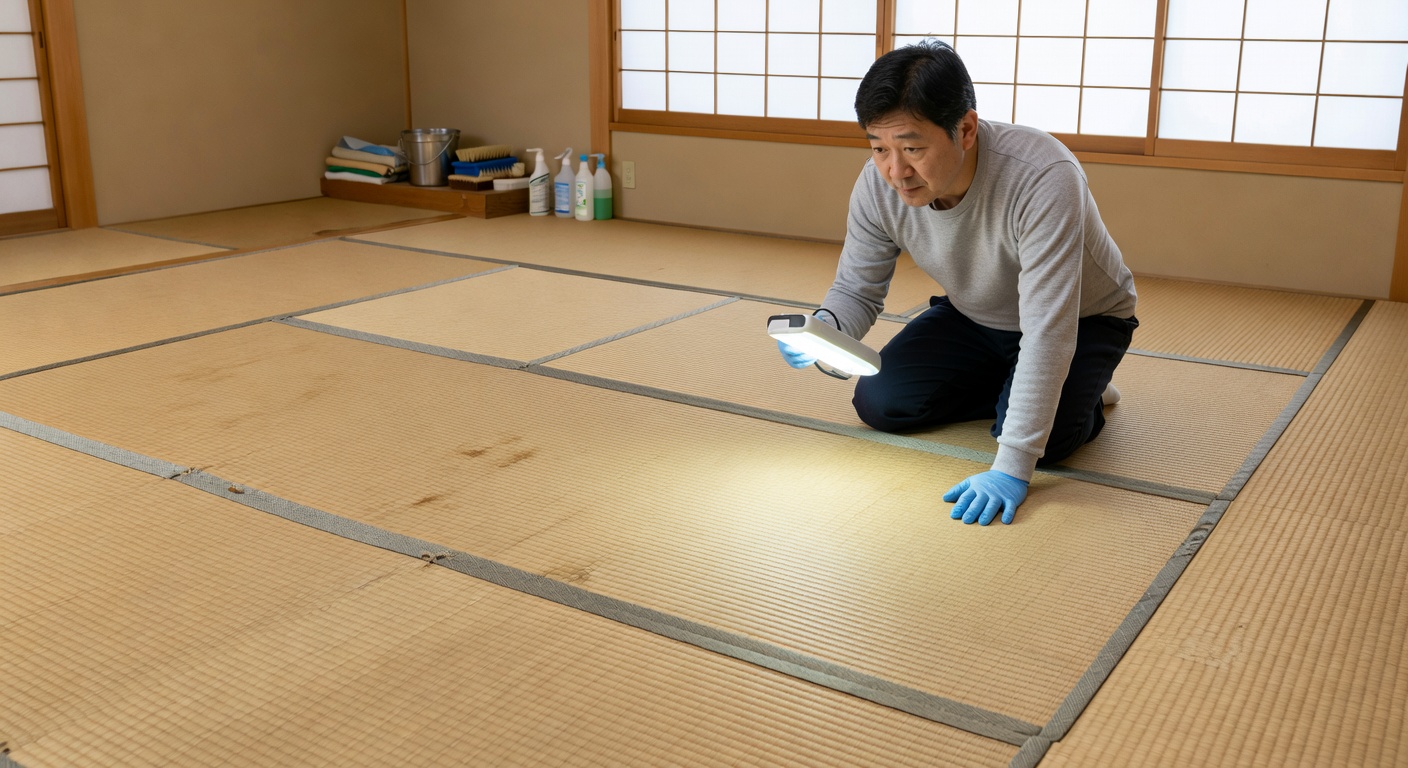
- Clean under and around mats — removing any mold from summer
- Replace Shoji paper before the winter season begins (traditional practice)
- Apply a very light natural wax to the mat surface if visibly dry (optional)
- Reduce ventilation gradually as temperatures drop — avoid cold drafts on mats
- Inspect and treat any staining before it becomes permanent
❄️ Winter (December – February)
Cold and dry. Focus on preventing moisture from heating condensation.
- Ventilate briefly each morning (even 10 minutes) to refresh air quality
- Watch for condensation from heating systems — wipe moisture immediately
- Use Tatami-safe underfloor insulation mats if the room is particularly cold
- Avoid placing electric heaters directly facing Tatami — can crack fibres
- Continue weekly vacuuming along the grain
- On dry, mild winter days, brief airing is still beneficial
How to Air Tatami Mats Properly
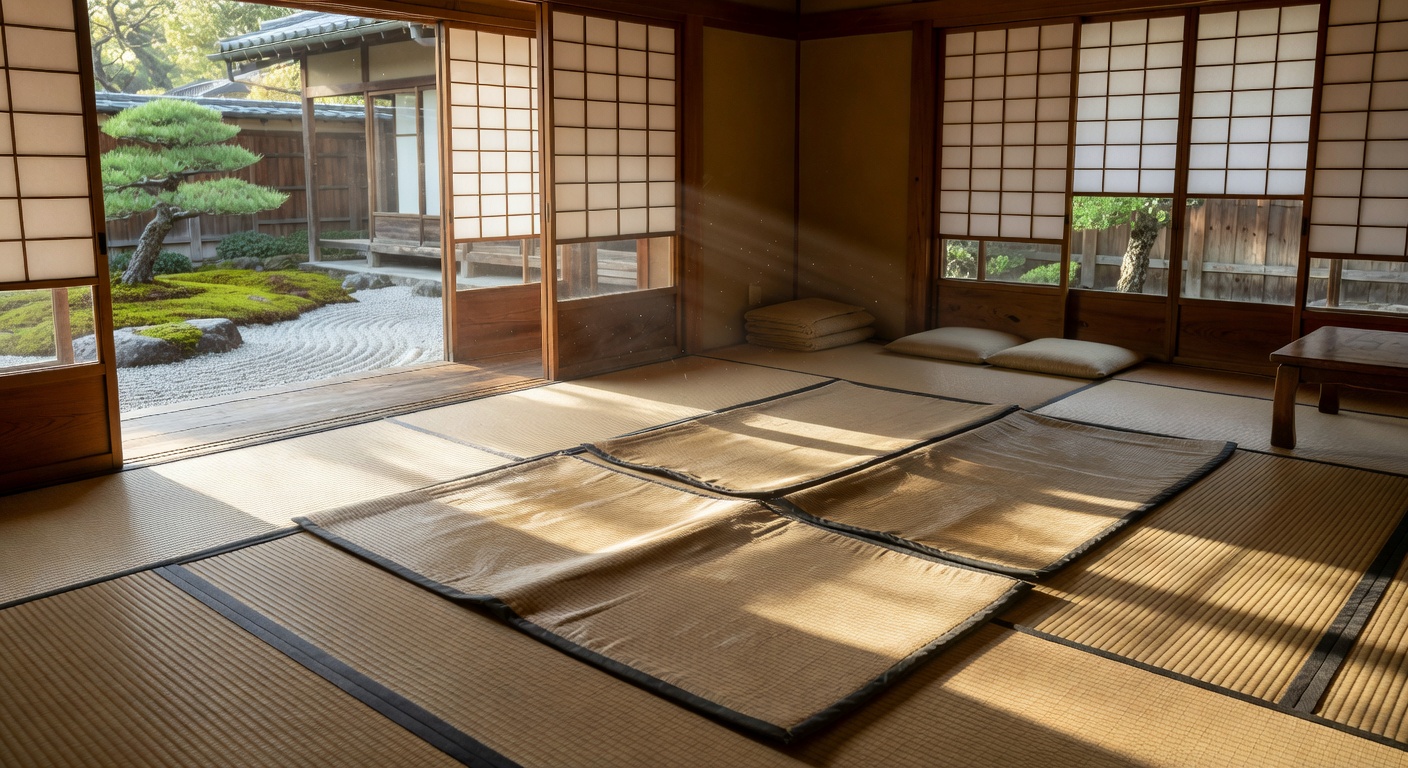
Airing is the single most beneficial maintenance action you can take — more effective than any cleaning product. Here is how to do it correctly:
- Choose the right day: A dry, breezy day with low humidity (below 60%). Avoid rainy or foggy days entirely.
- Remove carefully: Slide furniture off mats and lift each mat from the floor. Tatami is heavy — use a helper if needed.
- Stand them in shade: Lean mats against a wall or fence in a shaded, well-ventilated area. Direct sunlight can warp and discolour the rush surface.
- Duration: 2–4 hours per side is sufficient. For a particularly damp mat, up to 6 hours is fine.
- Brush before returning: Use a soft brush to sweep any outdoor dust off both sides before bringing mats back inside.
Freshly made Tatami has a beautiful, clean green-grass fragrance (igusa no kaori). This scent naturally fades over the first one to two years. Airing your mats regularly helps preserve and briefly revive this pleasant natural fragrance — no artificial products needed.
More Tatami mats are damaged by excess moisture than by any other cause. A simple humidity meter (hygrometer) in your Japanese room is an excellent investment — aim to keep the room between 40–60% relative humidity throughout the year.